
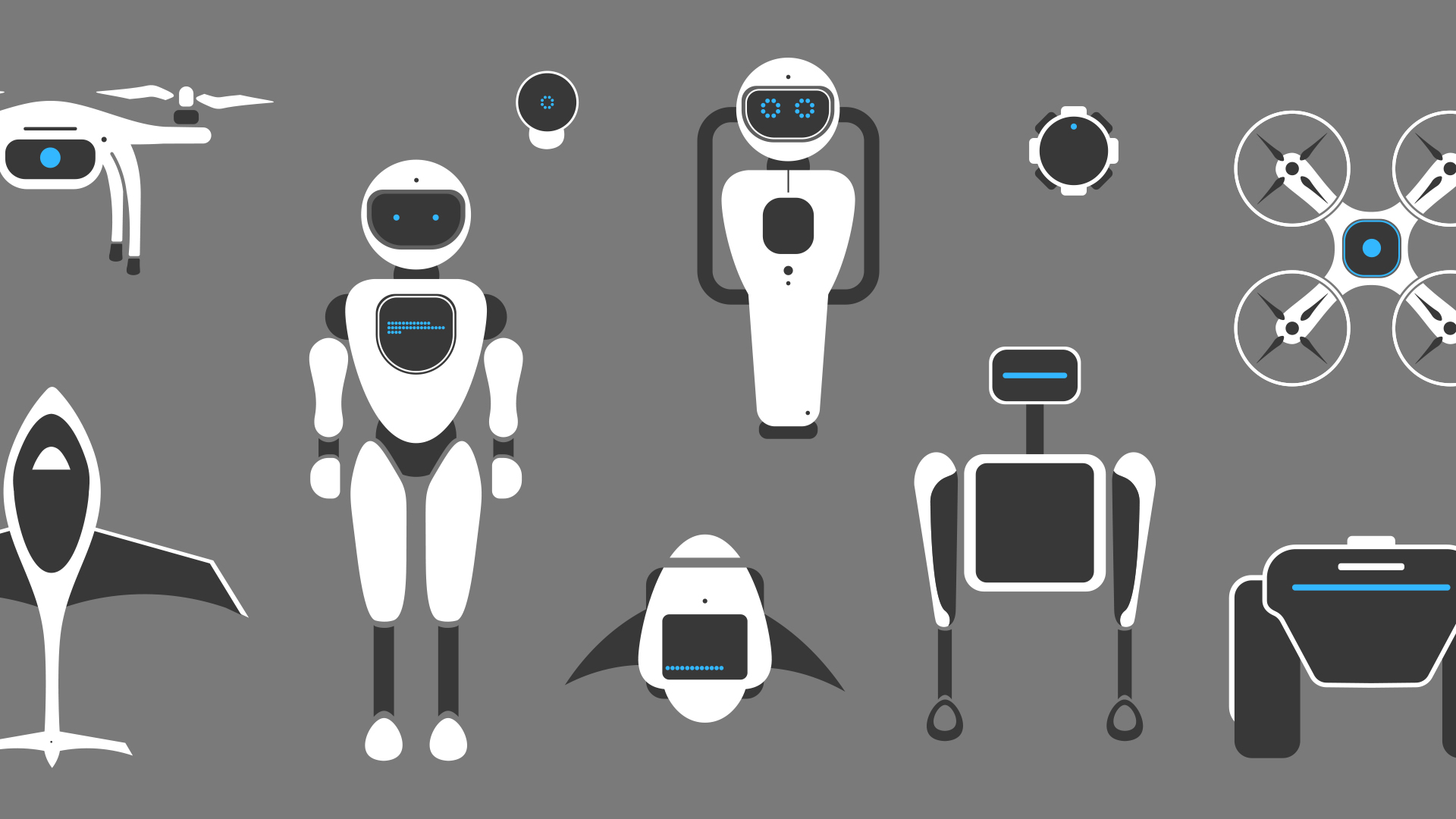
Over the next few years, robots will become an increasingly large part of our lives – whether we look at home robots like vacuum cleaners, last mile delivery robots, or large scale industrial and logistics robots. As much as the individual capabilities of a robot can vary with their intended use, there are a number of abilities that many of these robots will need, regardless of purpose.
We can draw parallels to humans in this way – no matter what your role in life, your individual talents and skills, you still need oxygen and food to fuel your bodily systems. Similarly, robots all need power sources, for example. Beyond basic capabilities however, there are also more advanced functions necessary, especially when it comes to autonomous or semi-autonomous robots.

As an example, many different types of robots need collision avoidance systems. They need some way to take sensor data and convert that into an understanding of the environment they are moving in, in order to make decisions about that movement. A robotic vacuum cleaner that runs into walls isn’t all that useful, a last mile delivery robot that doesn’t account for pedestrians could even be dangerous, and that danger could be compounded in larger scale environments like factories. A way to translate and abstract sensor data and turn that into environment awareness is key for many different robots.

Enter ROS and ROS2
Robot Operating System (or ROS/ROS 2) is designed to help handle common tasks that recur in robot development, providing services such as hardware abstraction, low-level device control, implementation of commonly used functionality, message passing between processes and package management, as well as tools and libraries, all licensed under an open source BSD license.
ROS or ROS 2?
ROS was initially started in 2007, and in the intervening years the original developer community has learned a lot, and there have been many developments in the industry alongside. ROS 2 is designed to adapt to those changes and improve upon the strengths of the original ROS without breaking the original codebase in a way that would make it unstable. The final release of ROS occurred in 2020, and will be EOL in 2025, while ROS2 is now being updated yearly. For the developer, it is up to them to decide which version is more suitable for their particular project based on these and other factors.
® RealSense™ and ROS(2)
The good news is, regardless of which is right for you, the RealSense SDK 2.0 has support for both, allowing you to jump start your robotics development with high quality depth sensors and solid ROS and ROS 2 integration. To get started, check out further information on our documentation portal and github.
